Introduction
Primary immunodeficiency, also known as an inborn error of immunity, refers to a large group of inherited conditions that affect how the immune system develops or functions. People with these disorders may experience recurrent infections, unusual inflammatory conditions, autoimmune complications, or other serious health problems. Treatment can involve immunoglobulin replacement, antibiotics, genetic testing, specialist monitoring, and sometimes stem cell transplantation.

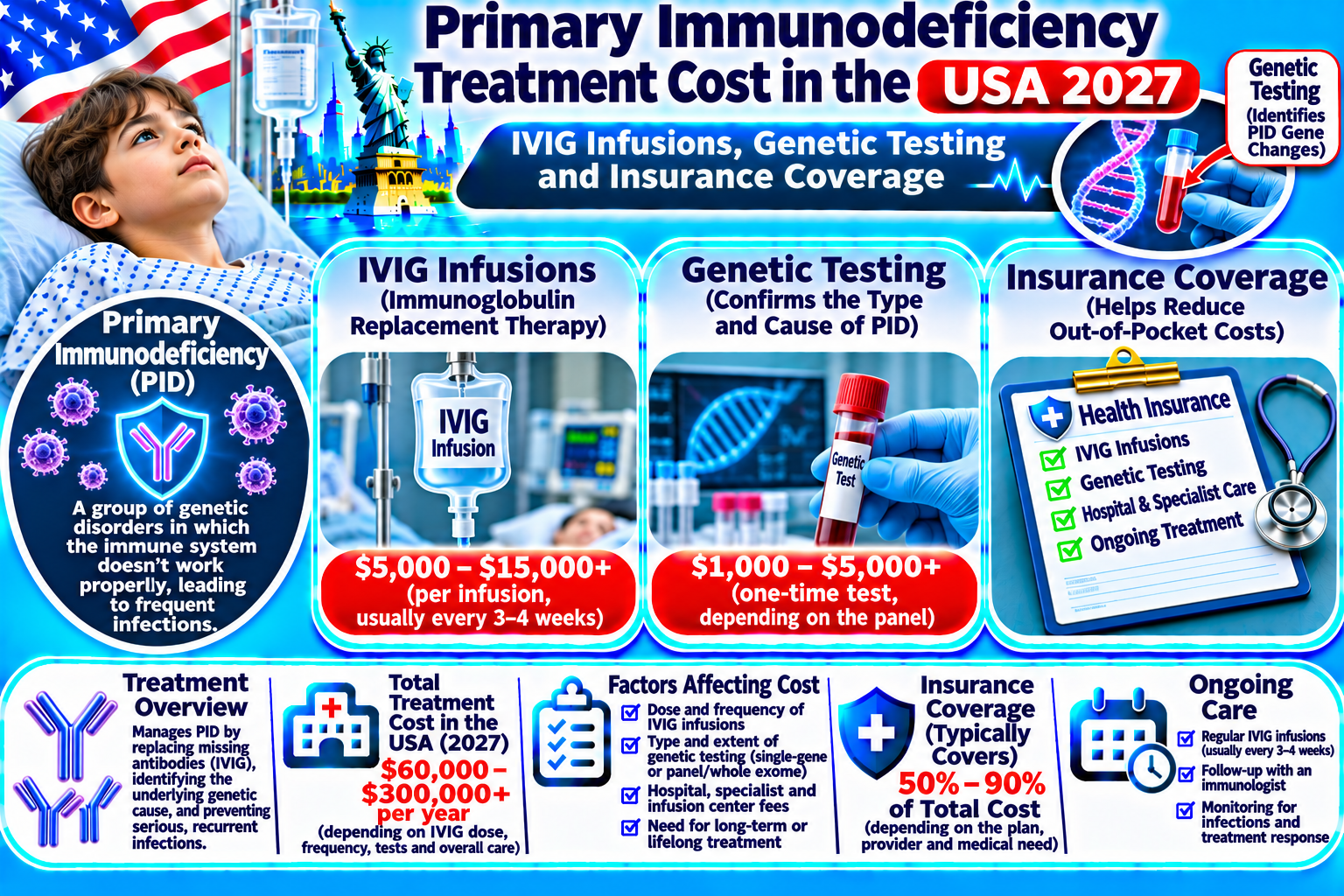
Understanding primary immunodeficiency treatment costs in the USA in 2027 is important for patients and families comparing IVIG infusion prices, subcutaneous immunoglobulin therapy, genetic testing expenses, hospital bills, and health insurance coverage.
Medical expenses vary significantly according to the specific immune disorder, treatment frequency, medication selection, infection severity, and insurance benefits. Some patients need routine monitoring, while others require lifelong immunoglobulin replacement or advanced hospital treatment.
This guide examines estimated American primary immunodeficiency treatment expenses for 2027, including diagnosis, IVIG therapy, genetic testing, hospitalization, insurance coverage, and long-term financial planning.
What Is Primary Immunodeficiency?
Primary immunodeficiency disorders develop because of inherited or genetic changes that affect immune function. They are distinct from secondary immune deficiencies caused by medications, certain infections, or other acquired conditions.
Hundreds of different inborn errors of immunity have been identified. Some primarily affect antibody production, while others involve T cells, phagocytes, complement proteins, or immune regulation.
Not every patient requires the same treatment. An accurate diagnosis is essential because therapies that help one immune disorder may be unnecessary or unsuitable for another.
Common Types of Primary Immunodeficiency
Common Variable Immunodeficiency
Common variable immunodeficiency, or CVID, often involves reduced antibody production and recurrent respiratory infections.
Many affected patients benefit from regular immunoglobulin replacement, although management depends on individual findings.
X-Linked Agammaglobulinemia
X-linked agammaglobulinemia causes markedly impaired B-cell development and antibody production. Immunoglobulin replacement is a central treatment.
Severe Combined Immunodeficiency
Severe combined immunodeficiency, or SCID, involves profound defects in immune function and can cause life-threatening infections early in life.
Selected patients may require hematopoietic stem cell transplantation, gene therapy where available, or other specialized treatments.
Chronic Granulomatous Disease
Chronic granulomatous disease affects the ability of certain immune cells to control infections. Management may include preventive antimicrobial medications and specialized therapies.
Common Symptoms
- Frequent ear, sinus, or lung infections.
- Infections that are unusually severe or persistent.
- Repeated courses of antibiotics.
- Chronic diarrhea or digestive problems.
- Poor growth in some children.
- Unusual fungal or opportunistic infections.
- Autoimmune or inflammatory complications.
- Recurrent hospitalization for infections.
These symptoms can occur for many reasons. Patients with suspected immune deficiency should undergo evaluation by a qualified immunologist.
How Is Primary Immunodeficiency Diagnosed?
Blood Immunoglobulin Testing
Blood tests measure immunoglobulin levels, including IgG, IgA, and IgM. Abnormal results may suggest certain antibody deficiencies.
Vaccine Antibody Response Testing
Doctors may evaluate how effectively the immune system produces antibodies after selected vaccinations.
Lymphocyte Subset Testing
Flow cytometry can measure different immune cell populations and help identify specific abnormalities.
Genetic Testing
Genetic panels, exome sequencing, or other molecular tests may identify disease-associated genetic variants.
Genetic results can help clarify diagnosis, guide treatment, and support family counseling, but not every patient receives a definitive genetic answer.
Additional Medical Evaluation
Patients may need infection cultures, lung imaging, pulmonary function testing, or other investigations depending on their symptoms.
Primary Immunodeficiency Treatment Options
Intravenous Immunoglobulin Therapy
Intravenous immunoglobulin, commonly called IVIG, provides antibodies collected from screened human plasma donations.
For patients with qualifying antibody deficiencies, IVIG helps replace missing antibodies and reduce the risk of certain infections.
Infusions are commonly administered approximately every three to four weeks, although schedules vary according to the patient’s condition and response.
Subcutaneous Immunoglobulin Therapy
Subcutaneous immunoglobulin, or SCIG, delivers antibodies beneath the skin. It may be administered at home after appropriate training.
Some regimens involve weekly dosing, while others use different schedules.
SCIG may reduce travel to infusion centers, but product, equipment, and nursing costs still need consideration.
Antibiotic Treatment
Antibiotics treat bacterial infections and may sometimes be prescribed preventively for selected immune disorders.
Medication selection depends on infection history, culture results, and specialist recommendations.
Stem Cell Transplantation
Hematopoietic stem cell transplantation can potentially provide a definitive treatment for certain severe primary immunodeficiency disorders.
It involves substantial risks, including infection, graft failure, and graft-versus-host disease.
Targeted Treatments
Some inherited immune disorders respond to targeted medications or specialized immune-modifying treatments.
These approaches are highly diagnosis-specific and should be directed by experienced specialists.
Primary Immunodeficiency Treatment Cost in the USA in 2027
American primary immunodeficiency treatment expenses depend on whether patients need diagnostic evaluation, regular immunoglobulin replacement, infection management, or advanced procedures.
IVIG and SCIG can represent major ongoing expenses, particularly for patients requiring long-term replacement therapy.
The following figures are illustrative 2027 budgeting estimates rather than verified national averages, guaranteed provider quotations, or patient out-of-pocket payments.
Estimated USA Cost Breakdown
| Treatment or Service | Estimated Cost (USD) |
|---|---|
| Clinical Immunologist Consultation | $200–$800+ |
| Immunoglobulin Blood Testing | $150–$800+ |
| Immune Cell and Antibody Function Testing | $500–$3,000+ |
| Targeted Genetic Testing Panel | $500–$4,000+ |
| Exome or Advanced Genetic Testing | $2,000–$8,000+ |
| IVIG Infusion Episode | $3,000–$15,000+ |
| SCIG Medication and Supplies | $2,000–$10,000+ per month |
| Infusion Administration, Excluding Drug | $200–$1,500+ |
| Outpatient Infection Treatment | $200–$2,000+ |
| Hospital Admission for Serious Infection | $10,000–$50,000+ |
| Stem Cell Transplant Treatment Episode | $200,000–$600,000+ |
Important: These are hypothetical planning ranges. IVIG costs depend heavily on dose, patient weight, product, and infusion setting. An infusion episode price may already include administration fees. Avoid adding overlapping charges without reviewing an itemized estimate.
USA Primary Immunodeficiency Cost Comparison
Because this article focuses on the United States, the following table compares American treatment scenarios rather than different countries.
| USA Treatment Scenario | Illustrative Budget |
|---|---|
| Diagnostic Evaluation and Monitoring | $1,000–$10,000+ |
| Regular IVIG Replacement, Annual | $36,000–$180,000+ |
| SCIG Replacement, Annual | $24,000–$120,000+ |
| Severe Disease With Repeated Hospitalization | $75,000–$250,000+ |
| Stem Cell Transplant Episode | $200,000–$600,000+ |
These scenarios are illustrative and not standardized treatment packages. Actual expenses may be substantially higher or lower depending on diagnosis, medical needs, and insurance arrangements.
IVIG Infusion Costs for Primary Immunodeficiency
IVIG is one of the most important treatments for patients with significant antibody deficiencies. It provides replacement antibodies that help reduce certain infections and associated complications.
The cost of an IVIG infusion depends on the prescribed dose, patient weight, product, infusion setting, and insurance reimbursement arrangements.
Patients commonly receive treatment every three to four weeks. Because many individuals need ongoing replacement therapy, expenses can accumulate throughout the year.
Hospital outpatient infusion centers may charge differently from independent infusion facilities or home infusion providers.
The medication itself usually represents a substantial portion of the total expense. Nursing services, infusion supplies, and laboratory monitoring may create additional charges.
IVIG vs SCIG Treatment Costs
IVIG and SCIG both provide immunoglobulin replacement, but their administration methods differ.
IVIG is delivered intravenously, usually during a scheduled infusion session. SCIG is administered beneath the skin and can often be performed at home after appropriate training.
Home-based SCIG may reduce travel and facility-related expenses, but it is not automatically cheaper overall. Product prices, dosing, supplies, and insurance reimbursement can offset those savings.
The most appropriate treatment depends on clinical effectiveness, patient preference, tolerability, access, and specialist recommendations.
Genetic Testing Costs
Genetic testing can help identify the underlying cause of certain primary immunodeficiency disorders.
A targeted gene panel may examine genes associated with known immune conditions, while exome sequencing investigates a broader range of genetic changes.
Testing expenses depend on laboratory technology, the number of genes analyzed, insurance arrangements, and whether family members also require testing.
Genetic counseling may create additional costs. Some eligible patients can access sponsored testing programs, although availability and eligibility vary.
A genetic diagnosis may help guide treatment selection, but a negative or uncertain result does not necessarily exclude an immune disorder.
Hospital Fees for Serious Infections
Patients with severe primary immunodeficiency may require hospitalization for pneumonia, bloodstream infections, or other serious complications.
Hospital expenses may include:
- Emergency physician evaluation.
- Blood cultures and laboratory testing.
- Diagnostic imaging.
- Intravenous antibiotics or antifungal medications.
- Specialist consultations.
- Inpatient nursing and monitoring.
- Oxygen or respiratory support.
- Intensive care when necessary.
Hospitalization costs increase when infections require prolonged treatment, intensive monitoring, or additional procedures.
Primary Immunodeficiency Treatment With Health Insurance
Many comprehensive American health insurance plans cover medically necessary primary immunodeficiency treatment, including eligible laboratory testing, immunoglobulin replacement, specialist consultations, and hospital services.
However, coverage depends on the patient’s diagnosis, policy, treatment setting, and medical necessity documentation.
Important insurance considerations include:
- Annual deductible and out-of-pocket maximum.
- Prior authorization for IVIG or SCIG.
- Specialty pharmacy and product requirements.
- Hospital or infusion center network participation.
- Coverage for home infusion equipment.
- Genetic testing authorization.
- Hospital admission benefits.
- Medication copayments and coinsurance.
Insurance companies may require evidence of low immunoglobulin levels, impaired antibody responses, or other diagnostic findings before approving replacement therapy.
Patients should retain copies of important laboratory results because they may be needed when insurance coverage changes.
Medicare Coverage for IVIG and SCIG
Medicare may cover qualifying immunoglobulin replacement therapy for eligible beneficiaries with covered primary immunodeficiency diagnoses.
Coverage can depend on the diagnosis code, treatment route, administration setting, and applicable benefit category.
Medicare Part B may cover certain qualifying immunoglobulin treatments, including eligible home IVIG services. Other arrangements may involve prescription drug coverage.
Patients should confirm coverage directly with Medicare or their plan before scheduling treatment.
Medicaid and Financial Assistance
Medicaid may cover medically necessary primary immunodeficiency treatment for eligible individuals, depending on state-specific requirements.
Some manufacturers, nonprofit organizations, and specialty pharmacies provide financial assistance programs for qualifying patients.
Hospital financial counselors may also help patients identify available resources and understand expected expenses.
Primary Immunodeficiency Treatment Without Insurance
Uninsured patients may face substantial costs for immunoglobulin products, infusion services, diagnostic testing, and hospitalization.
Before planned treatment, patients should request complete written estimates and ask about available financial assistance.
They should also confirm whether medication, administration, nursing, and laboratory charges are included in the quoted price.
Factors Influencing Primary Immunodeficiency Treatment Prices
1. Specific Immune Disorder
Different primary immunodeficiency conditions require different treatments, ranging from routine monitoring to lifelong replacement therapy.
2. Immunoglobulin Dose
Patient weight, infection history, and treatment response influence the amount of immunoglobulin prescribed.
3. IVIG or SCIG Selection
Administration route, product choice, infusion supplies, and treatment location affect overall costs.
4. Genetic Testing Requirements
Targeted testing, broad sequencing, and family studies have different laboratory expenses.
5. Hospital and Specialist Fees
Emergency treatment, immunologist consultations, infusion services, and inpatient care contribute to medical spending.
6. Insurance Coverage
Deductibles, negotiated rates, provider networks, and prior authorization requirements influence personal financial responsibility.
7. Infection Severity
Repeated infections, chronic lung complications, and prolonged hospitalization can substantially increase treatment expenses.
Long-Term Monitoring and Follow-Up
Patients receiving immunoglobulin replacement typically need periodic specialist visits and laboratory monitoring.
Follow-up care may include immunoglobulin measurements, blood counts, kidney function testing, and assessment of infection frequency.
Some patients also require lung function testing or imaging to evaluate chronic respiratory complications.
Long-term planning should account for transportation, infusion appointments, time away from work, and caregiver responsibilities.
How to Reduce Primary Immunodeficiency Treatment Costs
- Verify insurance benefits before starting IVIG or SCIG.
- Request complete written infusion estimates.
- Confirm immunologists and infusion providers are in-network.
- Compare approved infusion settings when medically appropriate.
- Review specialty pharmacy requirements.
- Ask about genetic testing assistance programs.
- Explore Medicare and Medicaid eligibility.
- Work with an immunology financial counselor.
Patients should never discontinue immunoglobulin replacement or change prescribed doses solely because of cost without consulting their specialist.
Frequently Asked Questions
How much does primary immunodeficiency treatment cost in the USA in 2027?
Illustrative annual expenses may range from several thousand dollars for diagnostic evaluation and monitoring to more than $100,000 for patients requiring regular immunoglobulin replacement.
How much does an IVIG infusion cost?
An illustrative infusion episode may cost approximately $3,000 to $15,000 or more, depending on dose, product, and administration setting.
Is SCIG cheaper than IVIG?
Not necessarily. Home administration may reduce certain facility costs, but overall expenses depend on medication pricing, supplies, and insurance reimbursement.
Does insurance cover genetic testing?
Some insurance plans cover medically necessary genetic testing when clinical criteria and authorization requirements are satisfied.
Does Medicare cover IVIG?
Medicare may cover qualifying IVIG treatment for eligible patients with covered diagnoses, subject to applicable benefit and medical necessity requirements.
Can primary immunodeficiency be cured?
Some severe inherited immune disorders may be treated definitively with stem cell transplantation or selected gene therapies. Many other conditions require long-term management.
Conclusion
Primary immunodeficiency treatment costs in the USA in 2027 depend on IVIG infusions, SCIG therapy, genetic testing, hospital fees, infection severity, and insurance coverage.
Patients should compare complete treatment estimates, verify specialty medication benefits, and consult experienced clinical immunologists before making medical decisions.
Accurate diagnosis, individualized treatment, consistent monitoring, and careful financial planning can help patients manage the long-term expenses associated with inherited immune disorders.
Medical Disclaimer: This article provides general educational and financial planning information only. It does not replace professional medical advice, diagnosis, or treatment. All 2027 cost ranges are illustrative estimates and should be verified directly with hospitals, immunologists, laboratories, specialty pharmacies, and insurance companies.
