Introduction
Wilson disease is a rare inherited disorder that prevents the body from removing excess copper effectively. Over time, copper can accumulate in the liver, brain, eyes, and other organs, potentially causing serious health complications. Treatment usually involves lifelong medication, regular liver monitoring, laboratory testing, dietary adjustments, and specialist consultations. Patients with advanced liver failure may require liver transplantation.

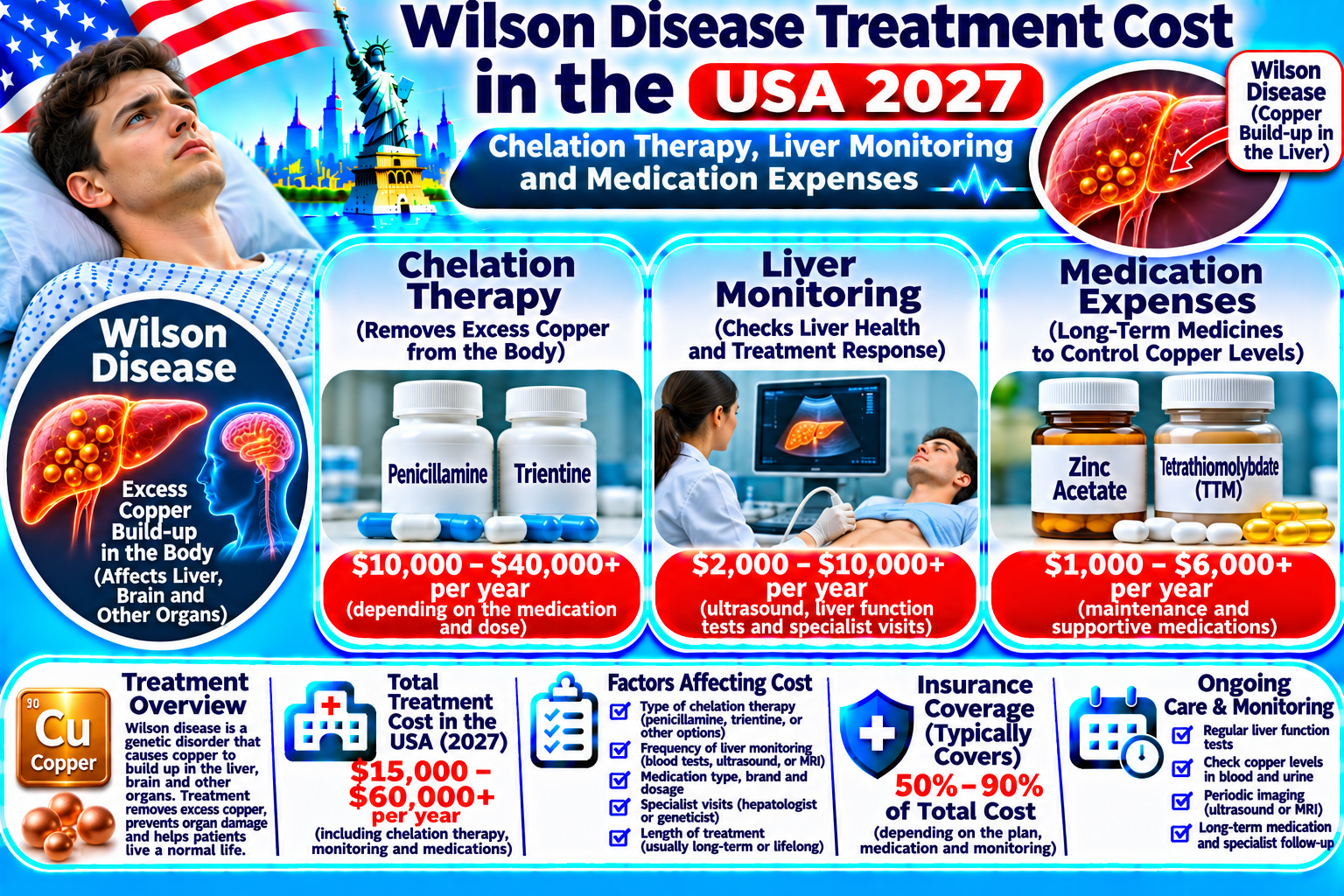
Understanding Wilson disease treatment costs in the USA in 2027 is important for patients and families comparing chelation therapy prices, copper-control medications, liver function tests, hospital bills, and health insurance coverage.
Medical expenses vary depending on disease severity, medication selection, treatment response, insurance benefits, and the presence of liver or neurological complications. Some patients remain stable with outpatient medication and monitoring, while others require hospitalization or advanced procedures.
This comprehensive guide examines estimated American Wilson disease treatment expenses for 2027, including diagnosis, chelation therapy, zinc treatment, liver monitoring, insurance coverage, and long-term financial planning.
What Is Wilson Disease?
Wilson disease is an inherited condition caused by disease-causing variants in the ATP7B gene. These genetic changes interfere with normal copper transport and elimination through bile.
As copper accumulates, it can damage tissues, particularly the liver and nervous system. Symptoms may begin during childhood, adolescence, or adulthood.
Without treatment, Wilson disease can cause progressive liver injury, neurological impairment, and potentially life-threatening complications.
Early diagnosis and consistent treatment can help prevent additional copper accumulation and improve long-term outcomes.
Common Symptoms of Wilson Disease
- Persistent fatigue and weakness.
- Abdominal discomfort or swelling.
- Jaundice or yellowing of the skin and eyes.
- Tremors or involuntary movements.
- Difficulty speaking or swallowing.
- Problems with balance and coordination.
- Changes in mood, behavior, or concentration.
- Unexplained liver enzyme abnormalities.
- Kayser-Fleischer rings around the cornea.
Symptoms differ between patients. Some people develop primarily liver-related problems, while others experience neurological or psychiatric manifestations.
How Is Wilson Disease Diagnosed?
Wilson disease diagnosis generally involves combining clinical findings, laboratory testing, eye examination, and sometimes genetic analysis or liver biopsy.
Serum Ceruloplasmin Testing
Ceruloplasmin is a copper-carrying protein found in the blood. Reduced levels may support a Wilson disease diagnosis, although this test alone cannot confirm or exclude the condition.
Twenty-Four-Hour Urinary Copper Testing
Urine copper measurement helps assess copper excretion and can support diagnosis or treatment monitoring.
Liver Function Tests
Blood tests evaluate liver enzymes, bilirubin, albumin, and other indicators of liver health.
Slit-Lamp Eye Examination
An ophthalmologist may examine the eyes for Kayser-Fleischer rings, which are associated with copper deposition.
ATP7B Genetic Testing
Genetic testing may identify disease-associated variants and help evaluate family members at risk.
Liver Biopsy
In selected cases, a liver biopsy may help measure hepatic copper or investigate liver damage when other diagnostic findings remain inconclusive.
Wilson Disease Treatment Options
D-Penicillamine Chelation Therapy
D-penicillamine is a copper-chelating medication that increases urinary copper excretion.
It has been used for many years to treat Wilson disease. However, treatment requires careful monitoring because adverse effects can include kidney problems, blood count abnormalities, and other reactions.
Doctors may also recommend pyridoxine supplementation for patients taking penicillamine.
Trientine Chelation Therapy
Trientine is another copper-chelating medication that helps remove excess copper through urine.
It may be prescribed when penicillamine is unsuitable or as an alternative initial treatment, depending on the patient’s clinical situation.
Different trientine formulations can have substantially different prices, storage requirements, and dosing instructions.
Zinc Therapy
Zinc reduces copper absorption from the digestive tract.
It may be used as maintenance therapy in selected patients or in other circumstances determined by a specialist.
Zinc treatment also requires monitoring because inadequate copper control or excessive copper depletion can cause complications.
Dietary Copper Management
Patients may be advised to limit foods with particularly high copper content, especially during initial treatment.
Examples include certain shellfish, organ meats, and some other copper-rich foods.
Dietary changes support medical treatment but generally cannot replace prescribed medication.
Liver Transplantation
Liver transplantation may be necessary for selected patients with acute liver failure or severe decompensated liver disease.
A successful liver transplant can correct the underlying hepatic copper-excretion defect, although it requires major surgery and lifelong post-transplant care.
Wilson Disease Treatment Cost in the USA in 2027
American Wilson disease treatment expenses depend heavily on medication choice, pharmacy pricing, laboratory monitoring, specialist services, and the severity of organ damage.
Generic medications may be more affordable in some circumstances, while certain branded chelation therapies can create substantial monthly expenses.
The following figures are illustrative 2027 budgeting estimates rather than verified national averages, guaranteed hospital quotations, or actual patient out-of-pocket payments.
Estimated USA Cost Breakdown
| Treatment or Service | Estimated Cost (USD) |
|---|---|
| Hepatologist Consultation | $200–$800+ |
| Liver Function Blood Tests | $100–$600+ |
| Serum Ceruloplasmin and Copper Tests | $100–$500+ |
| Twenty-Four-Hour Urinary Copper Testing | $100–$500+ |
| ATP7B Genetic Testing | $500–$3,000+ |
| Liver Ultrasound | $300–$1,500+ |
| Liver Biopsy Episode | $2,000–$8,000+ |
| D-Penicillamine Medication | $100–$2,000+ per month |
| Trientine Chelation Medication | $1,000–$20,000+ per month |
| Zinc Medication | $20–$500+ per month |
| Neurological Evaluation | $200–$800+ |
| Hospital Admission for Liver Complications | $10,000–$60,000+ |
| Liver Transplant Treatment Episode | $500,000–$1,200,000+ |
Important: These are broad hypothetical planning ranges. Medication costs can differ dramatically by formulation, dose, pharmacy, and insurance contract. Liver transplant estimates may already include surgery, hospital accommodation, anesthesia, and certain professional services.
USA Wilson Disease Cost Comparison
Because this article focuses on the United States, the following table compares American treatment scenarios rather than international countries.
| USA Treatment Scenario | Illustrative Budget |
|---|---|
| Stable Disease With Zinc and Monitoring, Annual | $1,000–$10,000+ |
| Penicillamine Therapy and Monitoring, Annual | $3,000–$30,000+ |
| Trientine Therapy and Monitoring, Annual | $15,000–$250,000+ |
| Complex Liver Disease With Hospitalization, Annual | $30,000–$150,000+ |
| Liver Transplant Treatment Episode | $500,000–$1,200,000+ |
These scenarios are illustrative and not standardized treatment packages. Actual expenses depend on diagnosis, treatment response, complications, medication availability, and insurance arrangements.
Chelation Therapy Costs for Wilson Disease
Chelation therapy is one of the most important treatments for Wilson disease. It helps remove excess copper from the body and reduces the risk of further organ damage.
The two principal chelating medications are D-penicillamine and trientine. Both increase copper elimination through urine, but they differ in tolerability, formulations, and pricing.
Treatment typically begins with a specialist-directed regimen designed to reduce accumulated copper. Once copper levels and clinical findings improve, patients may transition to a maintenance regimen.
Because Wilson disease generally requires lifelong treatment, medication costs can become a major financial consideration.
D-Penicillamine Medication Expenses
D-penicillamine has a long history of use in Wilson disease. It is effective for many patients but requires careful monitoring for adverse reactions.
Possible complications include skin reactions, protein in the urine, kidney dysfunction, and changes in blood cell counts.
Patients may need regular blood counts, kidney function tests, urine testing, and copper measurements.
Although some penicillamine products may be less expensive than certain trientine formulations, actual American pharmacy prices can vary considerably.
Patients should compare the exact prescribed formulation and strength rather than assuming all products have similar prices.
Trientine Treatment Costs
Trientine is an important alternative chelator for Wilson disease and is often better tolerated than D-penicillamine.
American trientine products include different salt formulations and branded or generic options.
Some specialty formulations may have extremely high gross pharmacy prices, creating substantial annual treatment expenses.
Insurance formularies, manufacturer assistance, and pharmacy contracts can dramatically affect the amount a patient actually pays.
Patients should not switch between trientine formulations without medical supervision because dosing and product instructions may differ.
Zinc Therapy Costs
Zinc therapy works differently from chelation. Instead of increasing copper elimination through urine, zinc reduces copper absorption from food.
It may be used for maintenance treatment in appropriately selected patients after copper levels have been controlled.
Zinc acetate is a prescription treatment option, while other zinc preparations are available in different formulations.
Not all zinc supplements are interchangeable for Wilson disease treatment. The amount of elemental zinc, product quality, and administration schedule matter.
Although some zinc products have relatively low purchase prices, regular laboratory monitoring remains necessary.
Liver Monitoring Costs
Regular liver monitoring is essential because Wilson disease can cause progressive liver injury even when symptoms are not obvious.
Monitoring also helps determine whether copper-removing treatment is effective and whether medication is causing unwanted effects.
Common monitoring services include:
- Liver enzyme testing.
- Bilirubin and albumin measurements.
- Complete blood counts.
- Kidney function testing.
- Twenty-four-hour urinary copper measurements.
- Serum copper-related testing.
- Liver ultrasound when indicated.
- Specialist assessment of symptoms and medication adherence.
Stable patients may undergo comprehensive follow-up approximately every six to twelve months, while individuals starting treatment or experiencing complications generally need more frequent monitoring.
Why Copper Monitoring Is Important
Both inadequate treatment and excessive copper removal can cause problems.
If treatment does not adequately control copper accumulation, liver or neurological damage may progress.
Excessive copper depletion can also cause complications, including anemia or neurological problems.
Doctors interpret copper measurements alongside symptoms, medication use, liver function, and other laboratory results.
Patients should not adjust chelation or zinc doses based on a single laboratory result without consulting their specialist.
Hospital Fees for Wilson Disease Complications
Some patients with Wilson disease require hospitalization because of acute liver injury, advanced cirrhosis, neurological complications, or other serious problems.
Hospital expenses may include:
- Emergency department evaluation.
- Hepatology and neurology consultations.
- Blood tests and diagnostic imaging.
- Intravenous medications and supportive treatment.
- Management of abdominal fluid accumulation.
- Treatment of gastrointestinal bleeding.
- Kidney support when necessary.
- Intensive care for severe liver failure.
Hospitalization costs increase when patients require prolonged admission, advanced organ support, or transplant evaluation.
Liver Transplantation Expenses
Liver transplantation may be lifesaving for selected patients with Wilson disease who develop acute liver failure or severe liver disease that cannot be adequately managed with medication.
Transplant expenses may include evaluation, donor organ procurement, surgery, anesthesia, hospitalization, and postoperative monitoring.
After transplantation, patients generally require lifelong immunosuppressive medication to prevent rejection.
Unlike routine medical treatment, successful liver transplantation usually corrects the underlying copper metabolism defect, so Wilson disease-specific copper-removing medication is generally no longer needed.
However, transplantation carries significant risks and is reserved for appropriate clinical circumstances.
Wilson Disease Treatment With Health Insurance
Many comprehensive American health insurance plans cover medically necessary Wilson disease treatment, including eligible medications, diagnostic testing, specialist appointments, and hospital services.
However, coverage depends on the patient’s policy, prescription formulary, provider network, and authorization requirements.
Important insurance considerations include:
- Annual deductible and out-of-pocket maximum.
- Coverage for penicillamine and trientine.
- Specialty pharmacy requirements.
- Prior authorization for branded medications.
- Hepatologist and hospital network participation.
- Coverage for copper monitoring tests.
- Genetic testing benefits.
- Liver transplant coverage when medically necessary.
Insurance approval does not necessarily eliminate personal expenses. Copayments, coinsurance, and deductibles may still apply.
Medicare Coverage for Wilson Disease
Original Medicare may cover medically necessary Wilson disease treatment for eligible beneficiaries when applicable requirements are satisfied.
Medicare Part A generally applies to qualifying inpatient hospital care, while Part B covers eligible physician services and diagnostic testing.
Medicare Part D may cover qualifying outpatient prescription medications, including certain chelation therapies.
Patients enrolled in Medicare Advantage or prescription drug plans should verify formularies, pharmacy networks, and authorization rules.
Medicaid and Financial Assistance
Medicaid may cover medically necessary Wilson disease treatment for eligible individuals, depending on state-specific benefits and requirements.
Some manufacturers offer patient support programs for selected Wilson disease medications.
Nonprofit organizations and hospital financial counselors may also help patients identify available assistance resources.
Eligibility varies, and patients should confirm benefits before relying on a particular program.
Wilson Disease Treatment Without Insurance
Uninsured patients may face substantial expenses for specialty chelation medications, diagnostic testing, liver monitoring, and hospitalization.
Before starting planned treatment, patients should request written estimates from specialists, laboratories, and pharmacies.
They should compare the full annual cost of medication and monitoring rather than focusing only on the initial prescription.
Factors Influencing Wilson Disease Treatment Prices
1. Disease Severity
Patients with stable disease generally have lower medical expenses than those with advanced liver damage or serious neurological complications.
2. Chelation Medication Selection
Penicillamine, trientine, and zinc products have different prices, dosing requirements, and monitoring considerations.
3. Medication Formulation
Generic and branded formulations may differ substantially in price. Insurance coverage can also vary between products.
4. Liver Monitoring Frequency
Patients starting treatment or experiencing complications may require more frequent laboratory testing and specialist appointments.
5. Hospital and Specialist Fees
Hepatology consultations, imaging, liver biopsy, hospitalization, and advanced procedures contribute to overall medical spending.
6. Insurance Coverage
Deductibles, negotiated rates, pharmacy formularies, and authorization requirements influence personal financial responsibility.
7. Geographic Location
Healthcare prices vary across American states and cities because of regional operating costs and insurance arrangements.
8. Complications and Transplantation
Liver failure, neurological deterioration, repeated hospital admissions, and transplantation can substantially increase expenses.
Long-Term Wilson Disease Management
Wilson disease generally requires lifelong medical management, even when symptoms improve and laboratory results become stable.
Patients should continue prescribed treatment and attend follow-up appointments because stopping medication can allow copper to accumulate again.
Long-term care may involve hepatologists, neurologists, dietitians, and other specialists.
Patients with cirrhosis may require additional surveillance for complications of advanced liver disease.
Financial planning should also consider transportation, time away from work, and the possibility of changes in medication coverage.
How to Reduce Wilson Disease Treatment Costs
- Verify prescription insurance coverage before treatment.
- Request complete written medication estimates.
- Compare medically appropriate covered formulations.
- Confirm specialists and laboratories are in-network.
- Review prior authorization requirements.
- Ask about manufacturer assistance programs.
- Explore Medicare and Medicaid eligibility.
- Work with a hospital financial counselor.
Patients should never discontinue chelation or zinc treatment solely because of cost without consulting their healthcare team. Interrupting treatment can cause serious complications.
Frequently Asked Questions
How much does Wilson disease treatment cost in the USA in 2027?
Illustrative annual expenses may range from a few thousand dollars for selected stable patients to more than $100,000 for individuals requiring expensive specialty chelation medications.
How much does trientine cost?
Trientine prices vary widely by formulation, dose, pharmacy, and insurance coverage. Certain specialty products may cost thousands of dollars per month.
Is penicillamine cheaper than trientine?
Some penicillamine products may be less expensive than certain trientine formulations, but actual prices depend on the prescribed product and insurance arrangements.
Does insurance cover Wilson disease medication?
Many comprehensive insurance plans cover medically necessary treatment, although prior authorization, specialty pharmacy rules, and patient cost-sharing may apply.
How often should liver function be monitored?
Stable patients generally require periodic monitoring, often every six to twelve months. More frequent testing may be necessary during treatment initiation or complications.
Can Wilson disease be cured?
Medication controls copper accumulation but generally does not eliminate the inherited disorder. Successful liver transplantation can correct the underlying hepatic copper-excretion defect in most patients.
Is lifelong treatment necessary?
Yes. Patients who retain their native liver generally require lifelong copper-control therapy and medical monitoring.
Conclusion
Wilson disease treatment costs in the USA in 2027 depend on chelation therapy, liver monitoring, medication selection, specialist services, hospital fees, and insurance coverage.
Patients should compare complete treatment estimates, verify prescription benefits, and consult experienced hepatologists before making medical decisions.
Early diagnosis, consistent copper-control treatment, regular monitoring, and careful financial planning can help patients manage the long-term expenses associated with Wilson disease.
Medical Disclaimer: This article provides general educational and financial planning information only. It does not replace professional medical advice, diagnosis, or treatment. All 2027 cost ranges are illustrative estimates and should be verified directly with hospitals, hepatologists, pharmacies, laboratories, and insurance companies.
