Introduction
Chronic lymphocytic leukemia, commonly called CLL, is a type of blood cancer that affects lymphocytes, particularly B cells. It generally develops slowly, although its progression varies significantly between patients. Treatment may involve targeted oral medications, antibody-based immunotherapy, chemotherapy in selected situations, and supportive hospital care.

Understanding chronic lymphocytic leukemia treatment costs in the USA in 2027 is important for patients and families comparing targeted therapy prices, immunotherapy expenses, hematologist consultations, laboratory testing, and hospital bills.
The total expense depends on disease progression, genetic risk factors, treatment duration, medication selection, insurance coverage, and complications. Some patients do not need immediate treatment, while others require expensive specialty medications or combination therapy.
This guide examines estimated American CLL treatment expenses for 2027, including diagnosis, targeted therapy, immunotherapy, hospital services, insurance benefits, and long-term financial planning.
What Is Chronic Lymphocytic Leukemia?
Chronic lymphocytic leukemia occurs when abnormal B lymphocytes accumulate in the blood, bone marrow, and lymphatic tissues.
These cells can interfere with normal immune function and blood cell production. The disease may cause swollen lymph nodes, fatigue, infections, anemia, or low platelet counts.
CLL is often diagnosed through routine blood testing before symptoms develop.
Although CLL is generally not considered curable with standard drug therapy, modern treatments can control the disease for extended periods.
Common Symptoms of CLL
- Persistent fatigue or weakness.
- Swollen lymph nodes.
- Unexplained weight loss.
- Night sweats.
- Frequent infections.
- Fever without an obvious cause.
- Abdominal discomfort from an enlarged spleen.
- Easy bruising or bleeding in advanced cases.
These symptoms may occur with other conditions. Persistent or unexplained symptoms should be evaluated by a healthcare professional.
How Is Chronic Lymphocytic Leukemia Diagnosed?
Complete Blood Count
A complete blood count may identify an increased number of lymphocytes. It also helps evaluate anemia and platelet abnormalities.
Flow Cytometry
Flow cytometry examines proteins on blood cells and helps establish whether the abnormal lymphocytes have a characteristic CLL pattern.
Genetic and Molecular Testing
Testing for TP53 abnormalities, deletion 17p, and IGHV mutation status can influence treatment selection and prognosis.
Imaging Studies
CT imaging may be recommended in selected circumstances, although routine imaging is not required for every patient.
Bone Marrow Evaluation
A bone marrow biopsy is not always necessary for initial diagnosis but may help investigate certain blood count abnormalities or treatment-related questions.
When Does CLL Require Treatment?
Not every patient with chronic lymphocytic leukemia needs immediate treatment.
Patients without symptoms or evidence of active disease may be monitored through an approach called active surveillance or watchful waiting.
Treatment is generally considered when there is progressive marrow failure, significant disease-related symptoms, symptomatic organ enlargement, or other established indications.
Starting treatment earlier is not automatically beneficial for patients with asymptomatic, early-stage disease.
Chronic Lymphocytic Leukemia Treatment Options
BTK Inhibitors
Bruton tyrosine kinase inhibitors, or BTK inhibitors, interfere with signaling pathways that help CLL cells survive.
Examples include acalabrutinib, zanubrutinib, and ibrutinib. Selection depends on the patient’s disease characteristics, other medical conditions, and current prescribing recommendations.
These medications are generally taken orally and may require ongoing treatment until disease progression or unacceptable toxicity.
Venetoclax-Based Therapy
Venetoclax targets the BCL-2 protein, which helps cancer cells avoid programmed cell death.
It may be used with an anti-CD20 antibody in an established fixed-duration treatment regimen or in other approved combinations.
Venetoclax requires careful dose escalation and monitoring because of the risk of tumor lysis syndrome.
Anti-CD20 Immunotherapy
Obinutuzumab and rituximab are monoclonal antibodies that target CD20 on B cells.
They may be combined with other therapies depending on the treatment plan.
Infusion reactions, infections, and changes in blood counts are important safety considerations.
Chemoimmunotherapy
Traditional chemotherapy combined with antibody treatment is now used less frequently than modern targeted therapies in many CLL settings.
However, selected patients may still receive chemoimmunotherapy based on clinical circumstances and specialist recommendations.
Cellular and Advanced Treatments
Advanced cellular therapies may be considered for certain patients whose CLL has returned or stopped responding to previous treatments.
These treatments are not routine first-line options and may involve specialized centers, significant expenses, and close monitoring.
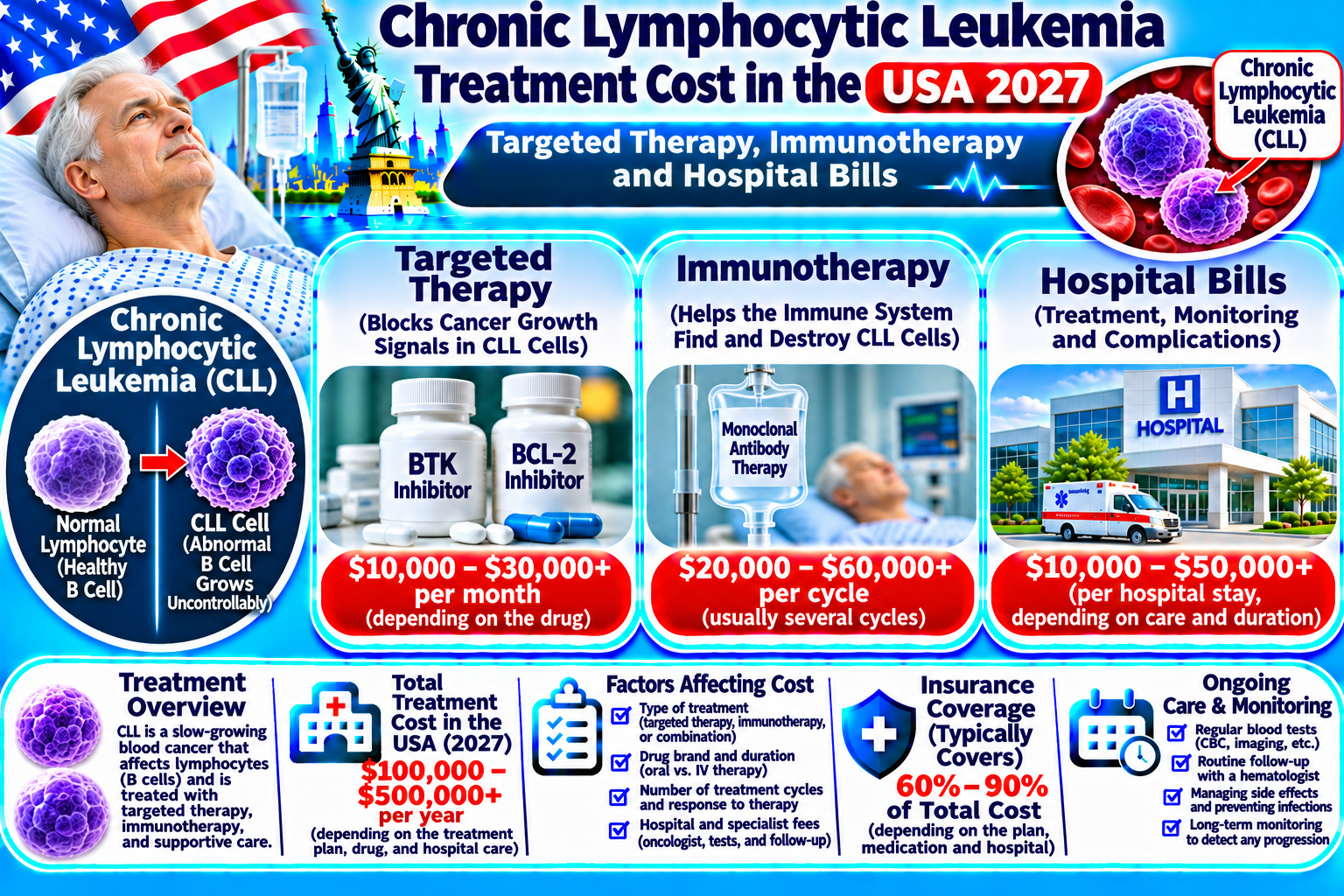
Chronic Lymphocytic Leukemia Treatment Cost in the USA in 2027
American CLL treatment expenses vary according to treatment selection, medication duration, hospital resources, insurance arrangements, and complications.
Targeted oral therapies may create substantial monthly expenses, while antibody infusions can involve medication, facility, and administration charges.
The following figures are illustrative 2027 budgeting estimates rather than verified national averages, guaranteed provider quotations, or patient out-of-pocket payments.
Estimated USA Cost Breakdown
| Treatment or Service | Estimated Cost (USD) |
|---|---|
| Hematologist Consultation | $200–$800+ |
| Blood Tests and Flow Cytometry | $300–$2,500+ |
| Genetic and Molecular Testing | $500–$4,000+ |
| Bone Marrow Biopsy Episode | $2,000–$8,000+ |
| BTK Inhibitor Therapy | $10,000–$18,000+ per month |
| Venetoclax Medication | $8,000–$16,000+ per month |
| Anti-CD20 Antibody Infusion Episode | $3,000–$15,000+ depending on product and dose |
| Infusion Administration, Excluding Drug | $200–$1,500+ |
| CT or Advanced Imaging | $800–$4,000+ |
| Hospital Admission for Complications | $10,000–$50,000+ |
| Intensive Care Hospitalization | $30,000–$150,000+ |
| Oncology Follow-Up Appointment | $150–$600+ |
Important: These figures are hypothetical gross-cost planning ranges, not confirmed 2027 prices. Hospital treatment estimates may already include laboratory, medication, and physician charges. Avoid adding overlapping costs without reviewing an itemized estimate.
USA CLL Treatment Cost Comparison
Because this article focuses on the United States, the following table compares different American treatment scenarios rather than international countries.
| USA Treatment Scenario | Illustrative Budget |
|---|---|
| Active Surveillance, Annual | $1,000–$6,000+ |
| BTK Inhibitor Treatment, Annual | $120,000–$216,000+ |
| Venetoclax-Based Treatment, First Year | $100,000–$220,000+ |
| Antibody-Based Combination Treatment | $50,000–$180,000+ per treatment course |
| Complex Treatment With Hospitalization | $150,000–$300,000+ annually |
These scenarios are illustrative rather than standardized treatment packages. Actual expenses depend on the regimen, treatment duration, response, complications, and insurance coverage.
Targeted Therapy Costs for CLL
Targeted therapy is a major component of modern chronic lymphocytic leukemia treatment. These medications interfere with specific biological pathways that help leukemia cells survive and multiply.
BTK inhibitors such as acalabrutinib, zanubrutinib, and ibrutinib can produce substantial ongoing pharmacy expenses. Some treatment plans require continuous medication, while others use fixed-duration combinations.
The total cost depends on the prescribed product, dosage, duration, pharmacy contracts, and insurance benefits.
Patients should compare the full expected treatment period rather than looking only at the first month’s medication price.
Venetoclax Treatment and Monitoring Expenses
Venetoclax is an important targeted medication for CLL. It may be combined with obinutuzumab or another appropriate therapy.
Treatment begins with gradual dose escalation to reduce the risk of tumor lysis syndrome, a potentially dangerous complication caused by rapid breakdown of cancer cells.
Patients may require frequent blood testing, hydration, and additional monitoring during the initial treatment period.
Individuals with increased tumor lysis risk may require hospital observation during selected dose increases.
These monitoring services can increase the total cost beyond the medication itself.
Immunotherapy Costs for Chronic Lymphocytic Leukemia
Anti-CD20 monoclonal antibodies are used in selected CLL treatment combinations.
Obinutuzumab and rituximab are generally administered through intravenous infusions at a hospital outpatient department or infusion center.
Expenses may include the antibody medication, infusion supplies, nursing services, laboratory testing, and treatment for infusion reactions.
Patients should verify whether their insurance plan processes these medications through medical benefits rather than ordinary retail pharmacy coverage.
Continuous vs Fixed-Duration Treatment Costs
One important financial difference between CLL treatment regimens is the expected treatment duration.
Continuous BTK inhibitor therapy can generate recurring medication expenses over several years.
Fixed-duration combinations involve intensive treatment during a defined period, followed by monitoring without the same scheduled anticancer medications when treatment is completed successfully.
A published analysis of US Medicare beneficiaries found that first-year total healthcare spending was substantial for both venetoclax-obinutuzumab and BTK inhibitor treatment groups. Spending during later observation periods differed because of treatment duration.
However, fixed-duration therapy is not appropriate for every patient, and disease relapse may eventually require additional treatment.
Hospital Bills for CLL Complications
Some patients with chronic lymphocytic leukemia require hospitalization because of infections, severe anemia, low platelet counts, or treatment-related complications.
Common hospital expenses include:
- Emergency department evaluation.
- Hematology and oncology consultations.
- Blood tests and diagnostic imaging.
- Intravenous antibiotics.
- Blood or platelet transfusions.
- Intravenous fluids and monitoring.
- Treatment of medication complications.
- Intensive care when necessary.
Hospital bills increase when patients require prolonged admissions, advanced infection treatment, or intensive monitoring.
CLL Treatment With Health Insurance
Many comprehensive American health insurance plans cover medically necessary chronic lymphocytic leukemia treatment, including eligible targeted medications, antibody infusions, diagnostic testing, and hospital services.
However, coverage depends on the patient’s policy, medication formulary, treatment indication, and provider network.
Important insurance considerations include:
- Annual deductible and out-of-pocket maximum.
- Specialty pharmacy coverage.
- Prior authorization for targeted medications.
- Oncologist and hospital network participation.
- Coverage for antibody infusions.
- Diagnostic and genetic testing benefits.
- Hospital admission coverage.
- Medication copayments and coinsurance.
Insurance approval does not necessarily eliminate personal expenses. Patients should request an estimate of their expected financial responsibility.
Medicare Coverage for CLL Treatment
Original Medicare may cover medically necessary CLL treatment for eligible beneficiaries when applicable requirements are satisfied.
Medicare Part A generally applies to qualifying inpatient hospital care, while Part B covers eligible physician services and many outpatient infusion treatments.
Medicare Part D may cover qualifying oral anticancer medications.
Patients enrolled in Medicare Advantage or prescription drug plans should review formularies, pharmacy requirements, and authorization rules.
Medicaid and Financial Assistance
Medicaid may cover medically necessary CLL treatment for eligible patients, depending on state-specific requirements and benefits.
Some cancer centers provide financial counseling, while nonprofit organizations and manufacturer programs may offer assistance to qualifying individuals.
Assistance availability varies, and patients should confirm eligibility before relying on a particular program.
CLL Treatment Without Insurance
Uninsured patients may face substantial expenses for specialty medications, antibody infusions, genetic testing, and hospitalization.
Before beginning planned treatment, patients should request written estimates from cancer centers and specialty pharmacies.
They should also ask whether medication administration, laboratory testing, physician services, and follow-up appointments are billed separately.
Factors Influencing Chronic Lymphocytic Leukemia Treatment Prices
1. Disease Progression
Patients requiring active treatment generally have higher expenses than individuals managed through routine surveillance.
2. Genetic Risk Factors
TP53 abnormalities, deletion 17p, and other disease characteristics may influence medication selection and treatment planning.
3. Targeted Medication Selection
Different BTK inhibitors, venetoclax combinations, and other specialty therapies have different prices and dosing schedules.
4. Treatment Duration
Continuous treatment can produce higher cumulative medication expenses than some fixed-duration regimens, although total costs vary.
5. Hospital and Specialist Fees
Infusion services, specialist appointments, genetic testing, and hospitalization contribute to medical spending.
6. Insurance Coverage
Deductibles, negotiated rates, pharmacy formularies, and authorization requirements influence personal financial responsibility.
7. Complications and Readmissions
Serious infections, low blood counts, medication side effects, and repeated hospital admissions can substantially increase expenses.
Long-Term Monitoring and Follow-Up Costs
Patients with CLL require periodic monitoring, even when they are not receiving active treatment.
Follow-up care may include:
- Regular hematologist appointments.
- Complete blood counts.
- Assessment of lymph nodes and symptoms.
- Medication safety monitoring.
- Evaluation for infections.
- Additional testing when disease progression is suspected.
Patients should also consider transportation, time away from work, and caregiver expenses when planning long-term care.
How to Reduce CLL Treatment Costs
- Verify insurance benefits before starting treatment.
- Request complete written treatment estimates.
- Confirm cancer specialists and infusion centers are in-network.
- Review specialty pharmacy requirements.
- Ask about manufacturer and nonprofit assistance programs.
- Explore appropriate clinical trial opportunities.
- Discuss Medicare and Medicaid eligibility.
- Work with an oncology financial navigator.
Patients should never stop prescribed CLL medications or change treatment schedules solely because of cost without consulting their hematologist.
Frequently Asked Questions
How much does CLL treatment cost in the USA in 2027?
Illustrative annual expenses may range from several thousand dollars for active surveillance to more than $150,000 for selected targeted therapy regimens.
How much do BTK inhibitors cost?
Illustrative gross medication costs may exceed $10,000 per month, depending on the product, pharmacy, and insurance arrangements.
Does insurance cover CLL immunotherapy?
Many comprehensive insurance plans cover medically necessary antibody-based treatment, subject to policy requirements and patient cost-sharing.
Does every CLL patient need chemotherapy?
No. Many patients receive targeted treatments, and some do not require immediate therapy. Traditional chemotherapy is used less frequently in modern CLL care.
Can chronic lymphocytic leukemia be cured?
CLL is generally not considered curable with standard drug therapy, but many patients achieve prolonged disease control with modern treatments.
Does Medicare cover targeted CLL medications?
Medicare may cover qualifying medications through applicable medical or prescription drug benefits, depending on treatment and plan requirements.
Conclusion
Chronic lymphocytic leukemia treatment costs in the USA in 2027 depend on targeted therapy, immunotherapy, diagnostic testing, hospital bills, treatment duration, and insurance coverage.
Patients should compare complete treatment estimates, verify prescription benefits, and consult experienced hematology specialists before making medical decisions.
Appropriate treatment selection, consistent monitoring, and careful financial planning can help patients manage the long-term expenses associated with CLL.
Medical Disclaimer: This article provides general educational and financial planning information only. It does not replace professional medical advice, diagnosis, or treatment. All 2027 cost ranges are illustrative estimates and should be verified directly with hospitals, hematologists, pharmacies, and insurance companies.
