Introduction
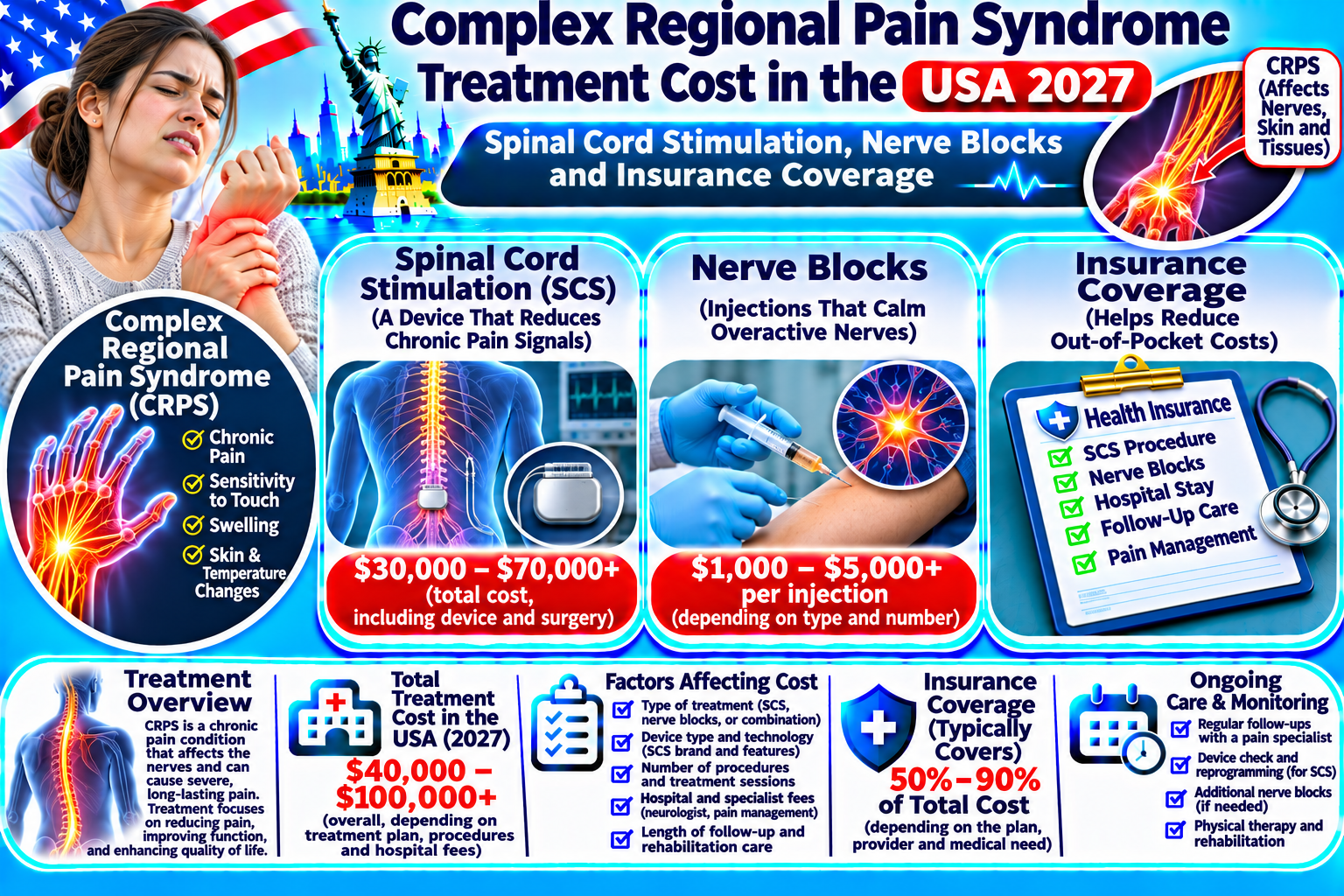
Complex regional pain syndrome, commonly called CRPS, is a chronic pain condition that usually affects an arm, hand, leg, or foot after an injury, fracture, surgery, or other medical event. It can cause severe pain, swelling, skin temperature changes, abnormal sensitivity, and reduced movement. Treatment may involve physical rehabilitation, medications, sympathetic nerve blocks, psychological support, and spinal cord stimulation in carefully selected patients.

Understanding complex regional pain syndrome treatment costs in the USA in 2027 is important for patients and families comparing spinal cord stimulation expenses, nerve block procedures, pain management consultations, rehabilitation fees, and health insurance coverage.
The financial burden varies according to symptom severity, treatment duration, insurance benefits, hospital pricing, and whether advanced procedures are required. Some patients improve with rehabilitation and medication, while others need repeated interventions or implanted neuromodulation devices.
This comprehensive guide explains estimated American CRPS treatment expenses for 2027, including diagnosis, physical therapy, nerve blocks, spinal cord stimulation, hospital services, insurance coverage, and long-term financial planning.
What Is Complex Regional Pain Syndrome?
CRPS is a condition characterized by persistent regional pain that is disproportionate to the original injury or event. It commonly involves sensory, autonomic, motor, and tissue-related changes.
The condition usually affects one limb but can sometimes involve other areas.
CRPS is not simply ordinary pain after an injury. It can involve altered pain processing, inflammation, abnormal nerve signaling, and changes in blood flow or temperature regulation.
Early recognition and appropriate multidisciplinary treatment may improve function and reduce long-term disability.
Types of Complex Regional Pain Syndrome
CRPS Type 1
CRPS type 1 develops without a confirmed major nerve injury. It may follow a fracture, sprain, surgery, or other physical trauma.
This is the more commonly diagnosed form of CRPS.
CRPS Type 2
CRPS type 2 occurs when there is an identifiable nerve injury associated with the condition.
Both types can cause severe pain, sensory changes, swelling, and movement difficulties.
Common Symptoms of CRPS
- Persistent burning, aching, or severe regional pain.
- Extreme sensitivity to touch or temperature.
- Swelling of the affected limb.
- Changes in skin color or temperature.
- Unusual sweating patterns.
- Joint stiffness and reduced mobility.
- Muscle weakness or tremors.
- Changes in hair, nails, or skin texture.
- Difficulty performing everyday activities.
Symptoms vary between individuals and may change over time. A qualified clinician should evaluate persistent pain accompanied by unusual swelling, temperature changes, or sensitivity.
How Is CRPS Diagnosed?
CRPS is primarily a clinical diagnosis based on medical history, physical examination, and recognized diagnostic criteria.
Clinical Examination
Doctors assess pain patterns, sensitivity, swelling, skin temperature, color changes, sweating, and movement limitations.
Budapest Diagnostic Criteria
The Budapest criteria are widely used to support diagnosis. They consider reported symptoms and observed signs across several categories while requiring that no better diagnosis explains the presentation.
Imaging Studies
X-rays, MRI, or other imaging may be ordered to investigate alternative causes of symptoms or associated complications.
Nerve Testing
Electromyography or nerve conduction studies may be appropriate when a separate nerve injury or neuropathy is suspected.
No single blood test or scan independently confirms every case of CRPS.
Complex Regional Pain Syndrome Treatment Options
Physical and Occupational Therapy
Rehabilitation is a central component of CRPS management. Treatment focuses on improving movement, restoring daily function, reducing fear of activity, and gradually increasing tolerance to appropriate physical tasks.
Programs may include graded movement, desensitization exercises, functional training, and selected techniques such as graded motor imagery or mirror therapy.
Pain Management Medications
Doctors may prescribe medications for neuropathic pain, inflammation, sleep problems, or other associated symptoms.
Medication selection depends on medical history, potential side effects, and individual treatment response.
No single medication reliably eliminates CRPS symptoms in every patient.
Sympathetic Nerve Blocks
Sympathetic nerve blocks involve injecting medication near selected sympathetic nerves.
Stellate ganglion blocks may be considered for upper-limb symptoms, while lumbar sympathetic blocks may be considered for lower-limb symptoms.
Evidence for sustained benefit is limited and variable. These procedures are not guaranteed cures.
Spinal Cord Stimulation
Spinal cord stimulation, or SCS, uses implanted electrical leads and a pulse generator to modify pain signaling.
Patients usually undergo a temporary stimulation trial before a permanent device is considered.
Some carefully selected patients with persistent CRPS may experience meaningful pain relief or improved function, but results vary.
Dorsal Root Ganglion Stimulation
Dorsal root ganglion stimulation, or DRG stimulation, is another neuromodulation approach that targets specific sensory nerve structures.
It may be considered for selected patients with localized CRPS, particularly when other treatments have not provided adequate relief.
Psychological Pain Management
Cognitive behavioral therapy and other psychological approaches can help patients manage distress, improve coping skills, and support rehabilitation.
These treatments address the impact of chronic pain and do not imply that the pain is imaginary.
Multidisciplinary Pain Rehabilitation
Some patients benefit from coordinated programs involving pain physicians, physical therapists, occupational therapists, and behavioral health professionals.
Complex Regional Pain Syndrome Treatment Cost in the USA in 2027
American CRPS treatment expenses vary significantly depending on whether care involves outpatient rehabilitation, medications, injection procedures, or implanted stimulation devices.
Spinal cord stimulation can create substantial upfront expenses because it involves device hardware, procedural services, and follow-up programming.
The following figures are illustrative 2027 budgeting estimates rather than verified national averages, guaranteed provider quotations, or actual patient out-of-pocket payments.
Estimated USA Cost Breakdown
| Treatment or Service | Estimated Cost (USD) |
|---|---|
| Pain Management Specialist Consultation | $200–$800+ |
| Physical Therapy Session | $100–$350+ |
| Occupational Therapy Session | $100–$350+ |
| MRI or Advanced Imaging | $800–$4,000+ |
| Prescription Pain Medications | $20–$500+ per month |
| Sympathetic Nerve Block Episode | $1,000–$5,000+ |
| Spinal Cord Stimulation Trial | $5,000–$20,000+ |
| Permanent Spinal Cord Stimulator Implantation | $25,000–$75,000+ |
| DRG Stimulation Implantation | $30,000–$80,000+ |
| Device Programming or Follow-Up | $150–$800+ |
| Multidisciplinary Rehabilitation Program | $3,000–$20,000+ |
| Hospital Admission for Complications | $8,000–$40,000+ |
Important: These are broad hypothetical planning ranges. A permanent stimulator implantation quote may include device hardware, operating room services, anesthesia, and certain physician fees. Trial and implantation charges may be billed separately. Patients should confirm exactly what is included before calculating totals.
USA CRPS Treatment Cost Comparison
Because this article focuses on the United States, the following table compares different American treatment scenarios rather than international countries.
| USA Treatment Scenario | Illustrative Budget |
|---|---|
| Rehabilitation and Medication, Six Months | $2,000–$12,000+ |
| Rehabilitation With Several Nerve Blocks | $5,000–$25,000+ |
| SCS Trial and Permanent Implantation | $30,000–$95,000+ |
| DRG Stimulation Treatment Episode | $35,000–$100,000+ |
| Complex Long-Term Care With Complications | $40,000–$120,000+ |
These scenarios are illustrative rather than standardized treatment packages. Actual expenses depend on medical needs, treatment response, complications, and insurance arrangements.
Spinal Cord Stimulation Costs for CRPS
Spinal cord stimulation is an advanced pain management option for selected patients with persistent CRPS who have not achieved sufficient improvement through comprehensive conservative treatment.
The procedure involves placing electrical leads near the spinal cord and connecting them to a device that delivers controlled stimulation.
The treatment usually begins with a temporary trial. If the trial provides meaningful improvement and the patient meets clinical criteria, a permanent system may be considered.
Spinal cord stimulation expenses can include the trial procedure, implanted leads, pulse generator, operating room charges, anesthesia, physician services, and follow-up programming.
Some patients also require future device replacement or revision surgery, creating additional long-term expenses.
What Is Included in a Spinal Cord Stimulation Bill?
- Initial pain specialist consultation.
- Medical evaluation and imaging when needed.
- Psychological assessment when required.
- Temporary stimulation trial.
- Permanent device and electrode leads.
- Operating room and anesthesia services.
- Postoperative follow-up appointments.
- Device programming and adjustments.
- Treatment of possible complications.
Potential complications include infection, lead migration, device malfunction, and inadequate pain relief. These problems may require additional medical care or surgery.
Sympathetic Nerve Block Costs
Sympathetic nerve blocks may be considered for selected patients whose symptoms interfere with rehabilitation.
A stellate ganglion block targets sympathetic nerves associated with the upper extremity, while a lumbar sympathetic block targets nerves associated with the lower extremity.
The procedure may involve imaging guidance, local anesthetic medication, specialist services, and recovery observation.
Some patients experience temporary relief, while others receive little or no benefit. High-quality evidence supporting lasting improvement remains limited.
Repeated blocks should be based on documented clinical benefit and should not replace an appropriate rehabilitation program.
Spinal Cord Stimulation vs Nerve Block Costs
Spinal cord stimulation generally involves a much higher upfront expense than a single sympathetic nerve block.
However, nerve blocks may need repeating, while stimulation devices involve long-term programming, maintenance, and possible replacement.
The two treatments also serve different purposes. A nerve block may provide temporary pain reduction that helps a patient participate in rehabilitation. Spinal cord stimulation is generally reserved for carefully selected patients with persistent symptoms despite other treatment approaches.
Cost alone should not determine treatment selection. Patients should discuss expected benefits, uncertainty, risks, and functional goals with their pain specialist.
Dorsal Root Ganglion Stimulation Costs
DRG stimulation targets specific sensory nerve structures and may be considered for selected patients with localized CRPS.
Like conventional spinal cord stimulation, it commonly involves a trial followed by permanent implantation when appropriate.
Expenses include specialized device hardware, physician services, operating room charges, and follow-up programming.
Clinical evidence is strongest for selected lower-extremity CRPS cases, and treatment is not appropriate for every patient.
Physical Therapy and Rehabilitation Expenses
Physical and occupational therapy are important components of CRPS treatment because improving movement and daily function is a central goal.
Patients may attend therapy sessions several times per week during an intensive rehabilitation period.
Expenses depend on session frequency, treatment duration, provider qualifications, and insurance benefits.
Some patients require additional equipment, home exercise guidance, or coordinated behavioral pain management.
Rehabilitation may remain necessary even when nerve blocks or stimulation procedures provide pain relief.
Hospital Fees and Procedure Expenses
Many nerve blocks are performed in outpatient settings. Spinal cord stimulation trials and implantations may take place in hospitals or ambulatory surgery centers.
Hospital-related charges can include:
- Facility and operating room fees.
- Anesthesia services.
- Medical device supplies.
- Imaging guidance.
- Physician and nursing services.
- Recovery monitoring.
- Medication administration.
- Management of procedure-related complications.
Hospitals and ambulatory surgery centers may charge different amounts for similar services. Patients should compare complete estimates rather than isolated procedure fees.
CRPS Treatment With Health Insurance
Many comprehensive American health insurance plans cover medically necessary CRPS evaluation, rehabilitation, prescription medications, and selected pain procedures.
However, coverage for sympathetic nerve blocks and implanted stimulation devices may require extensive documentation and prior authorization.
Important insurance considerations include:
- Annual deductible and out-of-pocket maximum.
- Pain specialist and hospital network participation.
- Physical therapy visit limits.
- Prior authorization for nerve blocks.
- Coverage criteria for spinal cord stimulation.
- Requirements for a successful stimulation trial.
- Psychological evaluation requirements.
- Device replacement and revision surgery benefits.
Insurers may request evidence that conservative treatments were attempted before approving advanced procedures.
Approval for a stimulation trial does not automatically guarantee approval for permanent implantation.
Medicare Coverage for CRPS
Original Medicare may cover medically necessary CRPS treatment for eligible beneficiaries when applicable coverage criteria are satisfied.
Medicare Part B generally covers eligible outpatient physician services, physical therapy, and certain procedures.
Qualifying inpatient hospital services may fall under Medicare Part A.
Spinal cord stimulation may be covered for selected patients with chronic intractable pain who satisfy relevant Medicare requirements.
Coverage for sympathetic nerve blocks can depend on local Medicare contractor policies and documented medical necessity.
Medicare Advantage plans may have additional network and authorization requirements.
Medicaid and Financial Assistance
Medicaid may cover medically necessary CRPS treatment for eligible individuals, depending on state-specific benefits and requirements.
Some hospitals offer financial assistance programs, while rehabilitation providers may offer payment arrangements.
Patients should verify eligibility and covered services before scheduling expensive procedures.
CRPS Treatment Without Insurance
Uninsured patients may face substantial expenses for specialist consultations, repeated therapy sessions, nerve blocks, and implanted stimulation devices.
Before planned procedures, patients should request written estimates explaining the full treatment cost.
They should ask whether the quoted amount includes device hardware, anesthesia, facility fees, postoperative care, and follow-up programming.
Factors Influencing CRPS Treatment Prices
1. Symptom Severity
Patients with severe functional limitations may require more intensive rehabilitation and specialized pain management.
2. Treatment Selection
Medication, rehabilitation, nerve blocks, and implanted stimulation devices have substantially different costs.
3. Treatment Duration
Long-term therapy, repeated procedures, and device follow-up can increase cumulative expenses.
4. Hospital and Specialist Fees
Facility charges, anesthesia, physician services, and rehabilitation appointments contribute to total costs.
5. Insurance Coverage
Deductibles, negotiated rates, provider networks, and authorization requirements influence patient financial responsibility.
6. Geographic Location
Healthcare prices vary across American states and cities because of regional operating expenses and insurance arrangements.
7. Complications and Revision Procedures
Device infections, lead migration, surgical revisions, and other complications may increase medical spending.
Recovery After Spinal Cord Stimulation
Patients undergoing permanent stimulator implantation generally require a period of postoperative recovery and activity restrictions to protect the implanted leads.
Follow-up appointments help assess wound healing, device settings, pain response, and functional improvement.
Patients should follow their specialist’s instructions about movement restrictions, infection symptoms, and device operation.
Successful implantation does not guarantee complete pain relief, and ongoing rehabilitation may still be necessary.
Long-Term CRPS Management Costs
CRPS may require long-term medical management, especially when symptoms remain persistent.
Follow-up care may include:
- Regular pain management appointments.
- Physical and occupational therapy.
- Medication reviews.
- Psychological pain management.
- Device programming when applicable.
- Evaluation of treatment response.
- Monitoring for complications.
Patients should also consider transportation, missed work, mobility equipment, and caregiver expenses when estimating the broader financial burden.
How to Reduce CRPS Treatment Costs
- Verify insurance benefits before advanced procedures.
- Request complete written treatment estimates.
- Confirm pain specialists and rehabilitation providers are in-network.
- Review physical therapy coverage and visit limits.
- Ask about lower-cost appropriate treatment settings.
- Confirm stimulation trial and implantation authorization separately.
- Discuss Medicare or Medicaid eligibility.
- Work with a hospital financial counselor.
Patients should never discontinue prescribed medications or rehabilitation solely because of cost without discussing alternatives with their healthcare team.
Frequently Asked Questions
How much does CRPS treatment cost in the USA in 2027?
Illustrative expenses may range from several thousand dollars for rehabilitation and medications to more than $75,000 for selected spinal cord stimulation procedures.
How much does spinal cord stimulation cost?
An illustrative permanent implantation episode may cost approximately $25,000 to $75,000 or more. Trial procedures, revisions, and follow-up care may create additional expenses.
How much does a sympathetic nerve block cost?
An illustrative procedure episode may cost approximately $1,000 to $5,000 or more, depending on the facility, imaging guidance, and physician services.
Does insurance cover spinal cord stimulation for CRPS?
Some insurance plans cover spinal cord stimulation when medical necessity and other authorization requirements are satisfied.
Is spinal cord stimulation a cure for CRPS?
No. It may reduce pain in selected patients, but it does not reliably eliminate CRPS or guarantee restoration of normal function.
Do nerve blocks permanently relieve CRPS?
Not reliably. Benefits are variable and often temporary. Their role should be considered within a comprehensive treatment plan.
Is physical therapy necessary after a stimulator implant?
Many patients continue rehabilitation because improving mobility and daily function remains an important treatment goal.
Conclusion
Complex regional pain syndrome treatment costs in the USA in 2027 depend on spinal cord stimulation, nerve blocks, rehabilitation, medications, hospital fees, and insurance coverage.
Patients should compare complete treatment estimates, verify procedure authorization, and consult experienced pain management specialists before making medical decisions.
Early assessment, individualized rehabilitation, careful selection of advanced treatments, and financial planning can help patients manage the long-term expenses associated with CRPS.
Medical Disclaimer: This article provides general educational and financial planning information only. It does not replace professional medical advice, diagnosis, or treatment. All 2027 cost ranges are illustrative estimates and should be verified directly with hospitals, pain specialists, rehabilitation providers, and insurance companies.
